
Holmes County Parole and Probation
Parole and probation can both require reporting, approved travel, lawful conduct, and compliance with a written set of terms. Their legal sources differ. Parole is a conditional move from an MDOC prison sentence into community supervision. The Mississippi State Parole Board acts on parole, while MDOC Community Corrections handles field supervision. Probation is imposed by a court, often instead of confinement or after part of a sentence. Its controlling record is the judgment, sentencing order, or later revocation order in the Holmes County court file.
A person released on bond, after dismissal, or after time served is not automatically on either form of supervision. A parolee-search result supports the existence of a parole record. It does not prove there is no other hold, case, or duty. Likewise, a probation term in a court order does not establish the date the person physically left the Highway 12 facility. The Holmes County released-inmate search covers the county booking and release record that resolves that separate event.
| Point | Parole | Probation |
|---|---|---|
| Legal source | State prison sentence and Parole Board action | Judgment or sentencing order from a court |
| Public starting point | MDOC Parolee Search | Holmes court case and sentencing papers |
| Local route | MDOC Holmes Probation & Parole Office when Holmes is the reporting county | Sentencing clerk and the assigned Community Corrections route |
| End record | MDOC or Board discharge record | Court or supervising-agency discharge record |
- Parole
- Conditional community supervision during an MDOC sentence after release from prison custody.
- Probation
- Court-ordered supervision that may replace or follow confinement.
- Discharge
- The formal end of a supervision term, shown by the agency or court record.
- Absconder
- A supervision status used when required contact is lost; it is not, by itself, a full warrant record.
Verify Holmes County Post-Release Supervision
The official MDOC Parolee Search accepts first name, last name, MDOC ID, city, and county. An MDOC number is the best starting key because names can match. The Holmes filter is useful, but it reflects a location or supervision clue rather than a sure conviction county. Someone convicted in Holmes may report elsewhere. A person supervised in Holmes may have been convicted in another county.
- Identify whether the person had a local court case or an MDOC prison sentence. County bond and time-served releases do not create a parole record by themselves.
- Search MDOC by ID when known. Otherwise use the full name and compare the available identity details before accepting a result.
- Run the parolee search without the Holmes filter first. Add city or county only to narrow a set of plausible matches.
- Read the reporting-location information as a routing clue. Do not treat the filter as proof of conviction location or final discharge.
- For probation, obtain the judgment, sentencing order, and any amended or revocation order from the court clerk.
- Ask the proper office for the central public record that confirms active supervision or discharge. Do not request protected field notes.
The manifest capture of the official MDOC parolee lookup shows the actual name, ID, city, and county search paths available for a Holmes County supervision check.
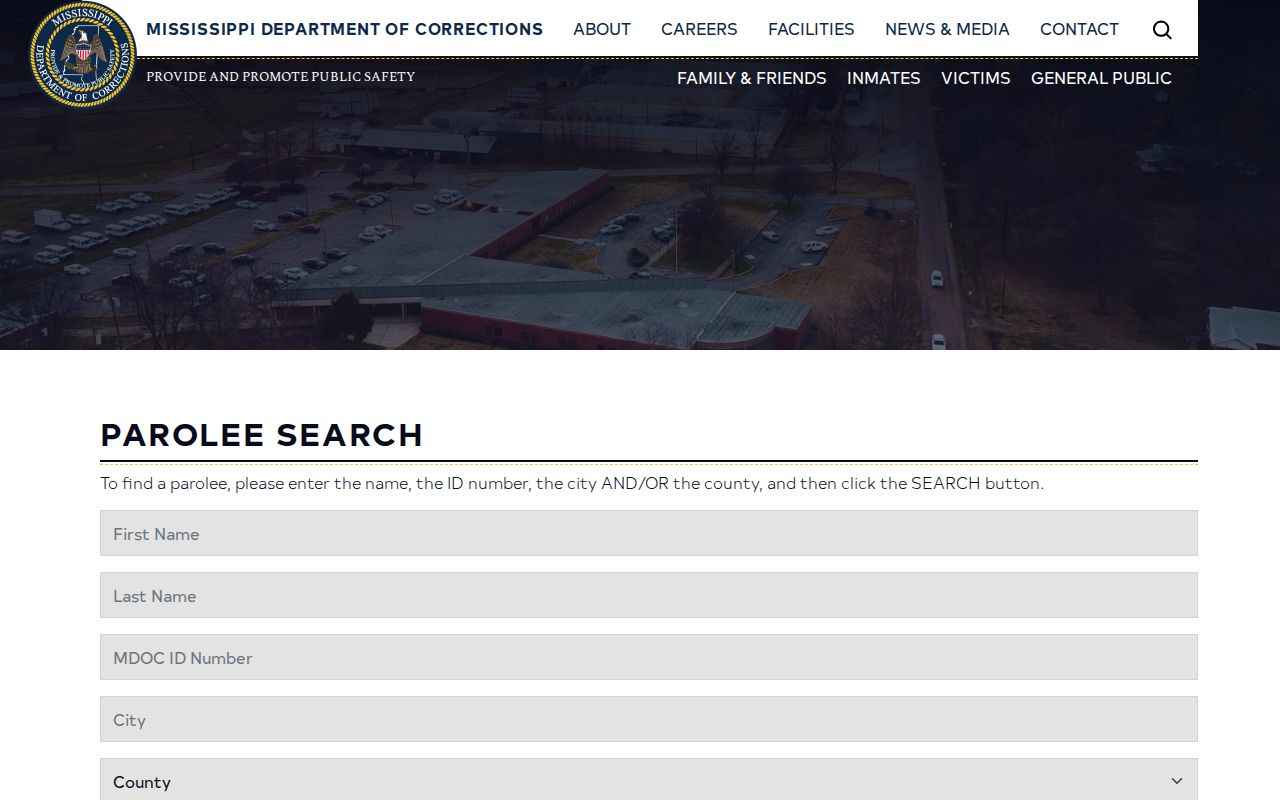
The county field can focus a search, but the state record and local office must still resolve where the person reports and whether supervision remains active.
Note: A missing search result does not establish that a Holmes County parole or probation term has ended.
Holmes County Supervision Office
Holmes County has a dedicated MDOC field office in Lexington. That local presence matters when a statewide result points toward Holmes but does not answer which office holds the public supervision record. The office can route a question about reporting location and identify the right central record for active status or discharge. It should not be asked to disclose private case notes or personal reporting details.
Holmes Probation & Parole Office103 West China Street
Lexington, MS 39095
Mail: P.O. Box 300
Phone: 662-834-0158
Fax: 662-834-3150
The MDOC Holmes office listing is the official source for this local contact.
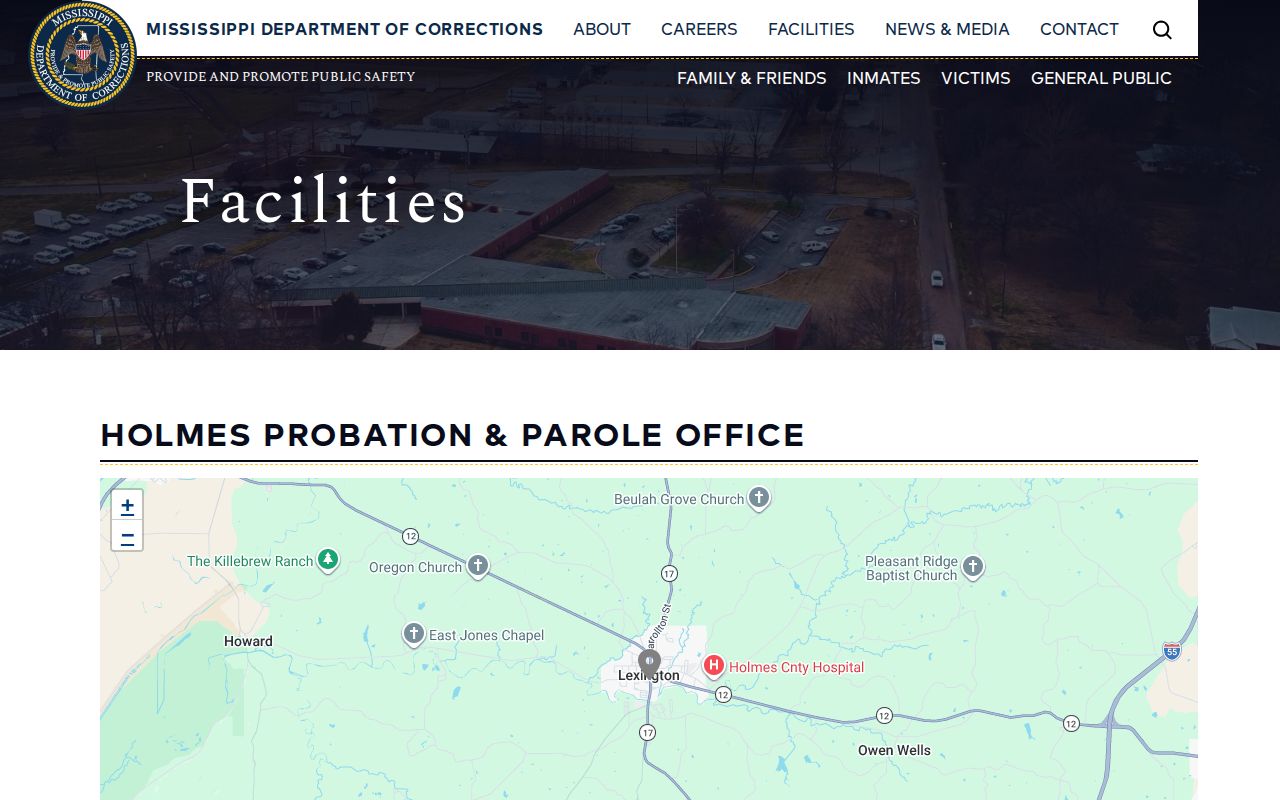
The listing distinguishes the Lexington supervision office from the Holmes/Humphreys correctional complex. One supervises community cases; the other houses local and state custody layers.
Use the Lexington office as a routing contact, not as a substitute for the statewide public record. Give the full name and MDOC number, if known, and ask whether Holmes is the correct reporting county. If the office directs the inquiry elsewhere, preserve that routing information. It may explain why a Holmes-only search missed a person. The office listing publishes no separate hours, so call before an in-person visit rather than assuming the building follows another MDOC office schedule.
Holmes County Parole Board Records
The Mississippi State Parole Board decides parole matters, but the research sweep found no official public person-by-person hearing calendar, monthly docket, decisions search, or routine grant-and-denial list. A search result from another state must not be used as a Mississippi record. For a named person, use the MDOC number and ask the Board for the scheduled hearing date or final written disposition, subject to lawful limits.
The Mississippi Parole Board rules in Title 29 include decision procedures and a route for public-record requests. The Board is located at 239 North Lamar Street, Suite 501, Jackson. Its primary published phone is 601-576-3520, and the state directory also lists 601-576-3528. A mailed request should use the current contact page because official sources display two different ZIP endings.
A scheduled hearing means consideration is due. It is not a release date. “Granted” or “approved” authorizes parole subject to the remaining release steps. “Denied” means release was not authorized at that hearing. “Continued,” “deferred,” or “set off” means the matter moved or awaits more information. A later rescission can withdraw an approval before release. Physical release still requires the effective MDOC release record.
Note: Parole eligibility under Mississippi law depends on the offense, sentence date, status, age, and current amendments.
Holmes County Supervision Violations
No official public Holmes County or statewide MDOC absconder list was found. MS SAVIN can send a registered user an “Escape and Abscond Supervision” event and a “Return custody” event. Those alerts serve a narrow notification role. They are not a full warrant search, do not establish a new conviction, and may reflect updates entered by a participating agency.
A violation can lead to a warning, changed terms, a court filing, an arrest order, or revocation, depending on the legal authority and facts. Revocation means conditional release or probation may be withdrawn after the required process. When an alert or stale online entry raises a warrant question, verify it with the issuing court or law-enforcement agency. Save the exact event text, date, MDOC ID, and reporting agency so the offices can address the same record.
Holmes County Release and Reentry
The Holmes/Humphreys County Correctional Facility has two roles. The Holmes County Sheriff operates the regional complex under an agreement, while MDOC oversees the state-offender layer. The county lists GED, adult basic education, alcohol and drug, life-skills, vocational, and religious programs. MDOC describes regional programs as preparation for community reintegration and documented continuing Holmes programming in March 2026, including completed welding training.
This local structure explains why MDOC supervision channels remain central even when the person was housed at a Sheriff-operated building. A local detainee released on bond may have no MDOC parole entry. A state offender leaving the same door for parole or earned-release supervision remains connected to MDOC records. Program availability does not prove participation, eligibility, or a date. It supplies local context for the custody-to-supervision path.
The March 2026 MDOC Holmes program release documents recent activity at the regional partner. It does not identify who later entered supervision. For one person, rely on the parolee result, Board disposition, effective release record, and assigned reporting office. Those records keep a general reentry program from being mistaken for proof about an individual case.
The sequence may read: Holmes local booking to community release, or Holmes MDOC custody to parole or earned-release supervision to eventual discharge. Legal custody, not the building name, controls which route applies.
Holmes County Supervision Discharge
Release from a facility and discharge from supervision are separate events. Parole and earned-release supervision are conditional community placements. Earned-release supervision keeps the participant under MDOC jurisdiction and in inmate status until the sentence expires under the governing rule. Probation remains tied to the court order. A person can therefore be out of the facility while still subject to a term, or off one form of supervision while another case remains.
Confirm the end of parole through MDOC or the Board’s central discharge record. For probation, obtain the filed satisfaction, discharge, or terminating order from the sentencing court and compare it with the supervision record. If the dates conflict, ask each office what its date represents. A web result can lag. A missing name can also reflect a search mismatch or a move to another county.
A tentative prison date, parole eligibility date, Board approval, release timestamp, and supervision discharge date each mark a different point. The Holmes County Release Date Lookup explains how MDOC’s tentative date and the actual release record fit into that sequence.